Stopping Power That Responds When It Matters
Brake Service in Texarkana for Worn Pads and Reduced Stopping Confidence
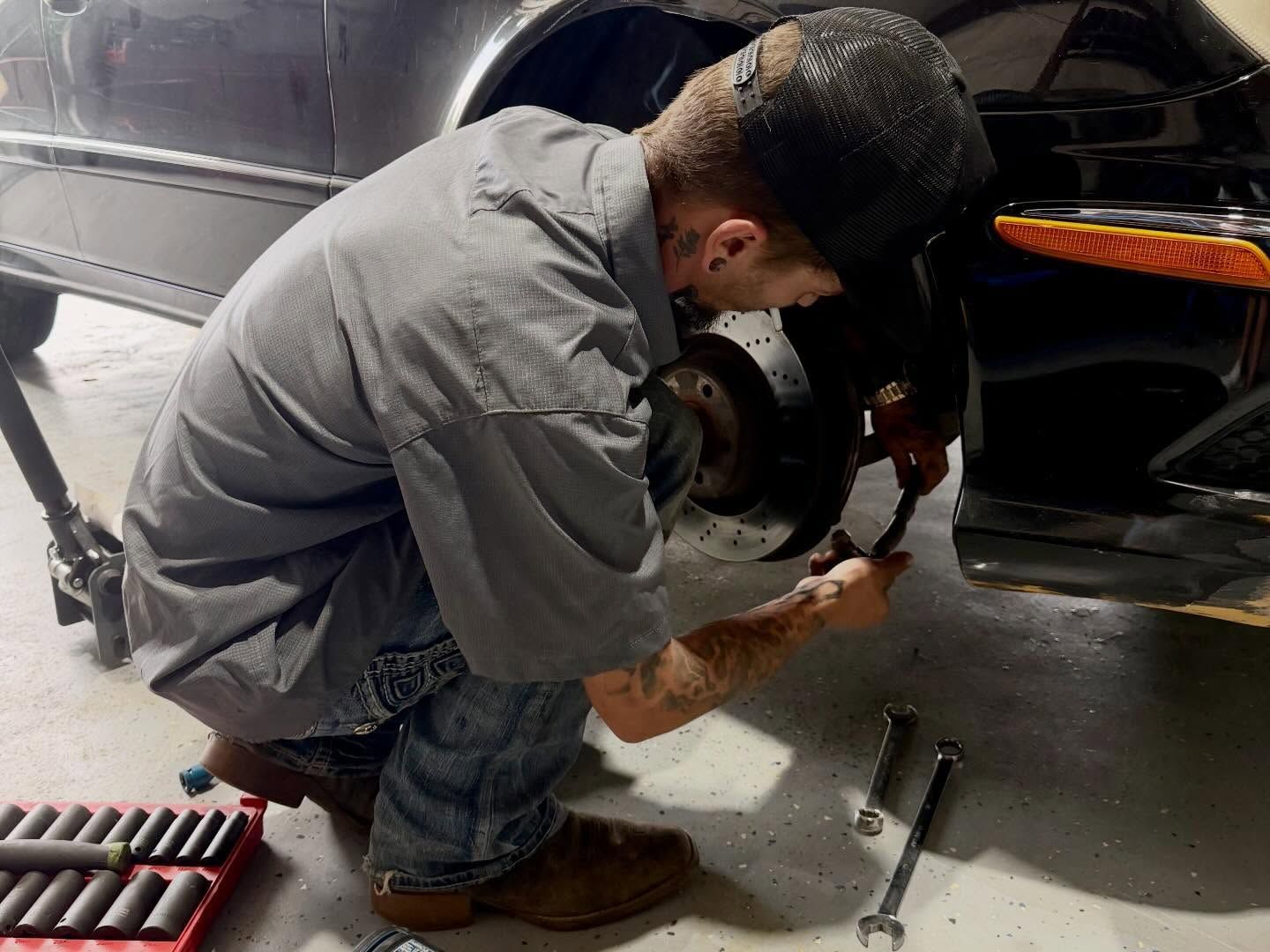
Finish 1 Tire and Service LLC provides brake service in Texarkana by inspecting brake pads, rotors, calipers, and braking components for safe operation. When brake pads wear thin or rotors develop heat grooves, stopping distances increase and pedal feel changes noticeably. The inspection process evaluates pad thickness, rotor surface condition, caliper movement, and hydraulic line integrity to identify issues before they develop into costly repairs or compromise vehicle safety.
Brake components wear progressively through normal use, but the rate depends on driving patterns, terrain, and how often your vehicle carries heavy loads. Pads that measure below manufacturer minimums reduce friction capacity, while rotors with uneven surfaces cause vibration during braking and accelerate pad wear. Calipers that stick or fail to release fully generate constant friction, overheating components and shortening their lifespan.
Schedule a brake inspection to evaluate current pad thickness and rotor condition before warning lights activate.
What Proper Brake Maintenance Prevents Long-Term
Routine brake inspections catch wear patterns early, preventing metal-to-metal contact that damages rotors and requires full replacement rather than resurfacing. Checking brake fluid condition during service visits reveals moisture contamination, which lowers the boiling point and reduces braking efficiency under sustained use. Finish 1 Tire and Service LLC examines caliper operation to confirm pistons retract fully and pads release properly after each stop.
After brake service, your vehicle stops in shorter distances with consistent pedal pressure, and you no longer hear grinding or squealing during deceleration. The brake pedal feels firm from the first application, without spongy travel or pulsation through the pedal face. Rotors remain smooth and free of heat scoring, extending the service life of replacement pads and maintaining even contact across the braking surface.
Brake inspections during routine maintenance visits allow technicians to measure remaining pad material and rotor thickness, providing accurate recommendations based on actual wear rather than mileage estimates. Addressing worn components before they fail completely reduces repair costs and prevents situations where braking performance deteriorates suddenly, especially in stop-and-go traffic or during highway merges where dependable stopping power keeps drivers safe.
Questions Before Scheduling Your Brake Inspection
Vehicle owners in Texarkana often ask about brake service timing, what inspections reveal, and how to recognize early warning signs.
What does a brake inspection actually measure?
Technicians measure brake pad thickness with precision gauges, check rotor surface for grooves or heat cracks, test caliper piston movement, and inspect hydraulic lines for leaks or fluid contamination.
How do I know when brake pads need replacement?
You notice squealing during light braking, feel vibration through the pedal, or see brake warning lights on the dashboard—though inspections catch wear before these symptoms appear.
Why do rotors sometimes need replacement instead of resurfacing?
Rotors wear thinner with each brake application, and once they measure below minimum thickness specifications, resurfacing removes too much material to safely handle braking forces and heat cycles.
What causes brake fluid to deteriorate over time?
Brake fluid absorbs moisture from the air through seals and hoses, lowering its boiling point and creating internal corrosion that damages calipers and master cylinders if not replaced periodically.
When should I schedule brake service if everything feels normal?
Plan inspections during routine maintenance visits or every six months, since pad wear occurs gradually and early detection prevents rotor damage that significantly increases repair costs.
Finish 1 Tire and Service LLC provides honest recommendations based on measured brake component condition rather than mileage intervals alone. Request a professional brake inspection to verify your vehicle maintains dependable stopping power for daily driving conditions.